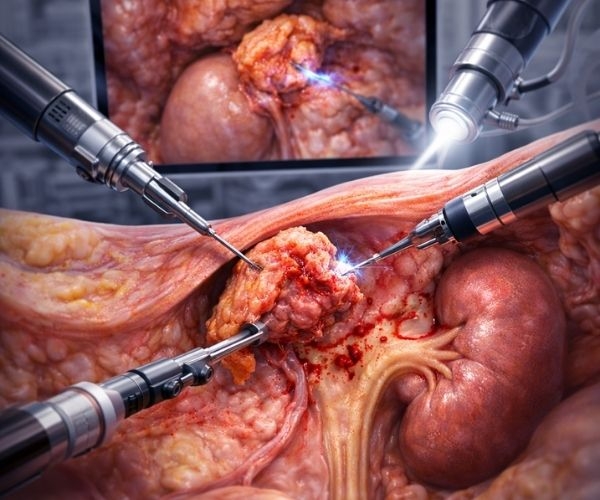
Adrenal (suprarenal) tumors originate from the adrenal glands, which are located above the kidneys and play a crucial role in hormone production. These tumors may be hormone-secreting or non–hormone-secreting and can lead to a wide range of clinical presentations.
In the treatment of adrenal tumors, an appropriate treatment plan is created by considering the size of the tumor, its hormonal activity, and the patient’s overall health status. In suitable cases, laparoscopic surgery is considered a minimally invasive and effective treatment option.
Diagnostic and Evaluation Process
The diagnosis of adrenal tumors involves a combined evaluation of hormonal assessments, imaging studies, and clinical findings. Advanced investigations such as computed tomography (CT) and magnetic resonance imaging (MRI) are used to examine the tumor’s structure, size, and relationship with surrounding tissues in detail.
Based on the obtained data, the necessity of surgical intervention and the suitability of the selected surgical method are determined.
Laparoscopic Surgical Approach
Laparoscopic surgery for adrenal tumors is a modern surgical technique performed through small incisions using a camera and specialized surgical instruments. This approach allows for the preservation of delicate anatomical structures and enables more controlled surgical intervention.
Laparoscopic surgery may offer advantages such as less postoperative pain, a shorter hospital stay, and a faster recovery period. With appropriate patient selection, safe and successful outcomes are targeted.
Post-Treatment Follow-Up
After surgery, patients are placed under regular follow-up. Hormone levels, general health status, and the recovery process are closely monitored. Additional treatments or supportive approaches may be planned when necessary.
The main goal of the treatment process is the effective management of the tumor while preserving the patient’s quality of life.