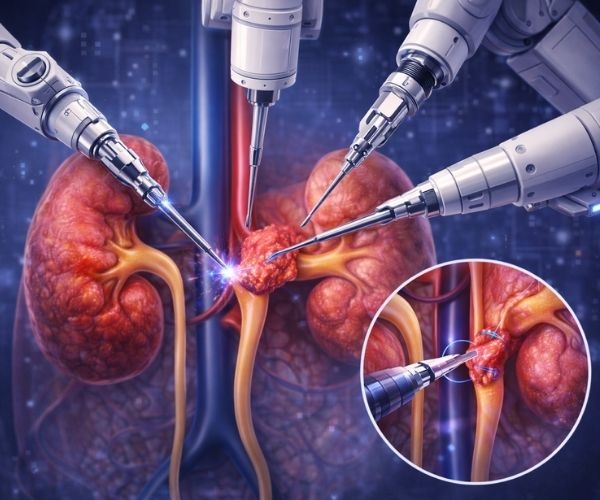
Ureteropelvic junction (UPJ) obstruction is a urological condition caused by a narrowing at the point where urine exits the kidney and enters the ureter, leading to impaired urine flow. Over time, this condition may result in kidney dilation, pain, recurrent infections, and decreased kidney function.
UPJ obstruction may be congenital or may develop later due to acquired causes. In appropriately selected patients, robotic surgery is considered a modern and effective treatment option for repairing this narrowing.
Diagnostic and Evaluation Process
The diagnosis of UPJ obstruction is based on a combined evaluation of the patient’s symptoms, imaging studies, and kidney function tests. Ultrasonography, computed tomography, and nuclear medicine examinations are used to analyze the severity of the obstruction and its effects on the kidney in detail.
Based on this evaluation, the necessity of surgical treatment and the most appropriate treatment method are determined.
Robotic Surgical Approach
In the treatment of UPJ obstruction, robotic surgery offers significant advantages for repairs requiring high precision. With three-dimensional visualization, enhanced range of motion, and tremor elimination, the narrowed segment can be repaired in a more controlled manner, restoring normal urine flow.
Robotic surgery may provide benefits such as preservation of surrounding tissues, reduced tissue trauma, and a faster recovery process. With appropriate patient selection, safe and durable outcomes are targeted.
Post-Treatment Follow-Up
After surgery, patients are followed through regular check-ups. Kidney function, continuity of urine flow, and the healing process are evaluated with follow-up examinations and necessary tests.
The goals of the treatment process are to preserve kidney function, relieve symptoms, and enable the patient to safely return to daily life.